Hydrostatic Test & Isolation Plugs
for Pressure Testing Pipe
High Pressure | Medium Pressure | Low Pressure
Pipe plugs from USA Industries are gripping and mechanical isolation/test plugs that minimize plant downtime by removing the need for time-consuming welding or cutting of piping end caps during hydrostatic pressure testing and isolation work.
On USAI's High Pressure GripSafe®ST Test Plugs
"GripSafe plugs have been valuable assets on the LNGC site. The quick and easy installation, use, and removal of the plugs have made testing team and pipe simple. The Lifting Device makes rigging of the larger plugs into position fast, convenient, and safe. The design of the grippers leave little to no marks inside the pipe. Torque values and plug info on the front plate makes plug identification and double-checking for the right plug usage easy. Overall, the GripSafe plugs are an excellent product.T. Sean Hydro Freeman S. Dazar Lumpi-Waber SPC Company
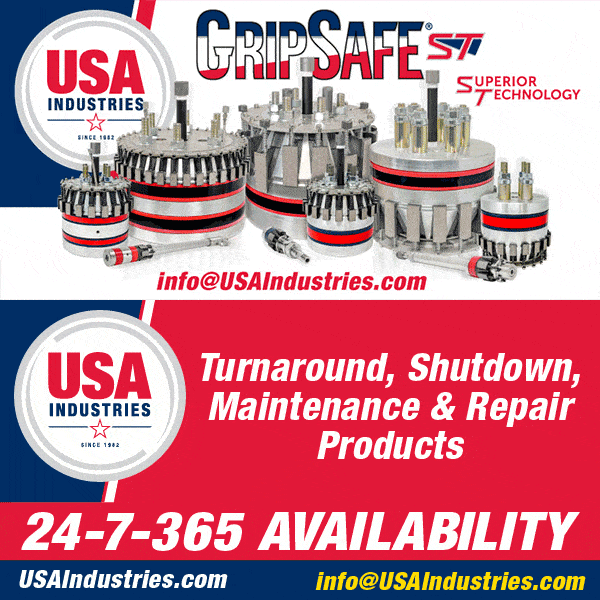
GripSafe ST High Pressure Test & Isolation Plugs


Test & Isolation Plugs


GripSafe® ST vs. Competitive Gripping Plugs
GripSafe ST uses a specially designed wedge-grip system that grips the pipe wall while virtually leaving no scarring on the surface — preserving the integrity of the pipe for return to service.
Virtually No Surface DamageCompetitive products use serrated jaw grippers that bite into the pipe's surface to gain grip — feasibly degrading the pipe's integrity and adding cost and time to rework or install temporary piping to compensate for the damage.
Heavier ID Surface Damage"…the contact of the competitive isolation plugs resulted in heavier ID surface damage than the GripSafe isolation plugs."
Anderson & Associates Consulting Metallurgical Engineers and Testing LabKey Benefits for Using Isolation & Testing Pipe Plugs
We manufacture and carry various hydrostatic mechanical pipe plug designs, among others. While pipe plugs may serve different purposes depending on the operator's application, they are classified as pipe fittings due to their function within piping systems.
Hydrostatic testing is a crucial quality assurance measure, especially during pipeline construction, maintenance, or repairs — ensuring compliance with industry standards and regulations while enhancing safety and reliability.
Safeguard Your Workers
Preserve Your Capital Assets

USA Industries
Pipe Plug Solutions
Also Known As

Which Pipe Plug Is Right For Your Application?
Isolation and test plugs are matched to your application primarily by pressure rating, then by the specific configuration of the test or maintenance job. Use the table below to match your pressure tier to the right GripSafe ST or mechanical plug, or jump to the quick finder for common scenarios.
| Pressure Tier | Plug Model | Best For |
|---|---|---|
| High Pressure | GSST Outboard Retraction Blocking (ORB) | Standard high-pressure hydrotest setups where the plug is set and retracted from outside the test section — the most common GripSafe ST configuration. |
| High Pressure | GSST Double Block & Bleed (DBB) | High-pressure isolation requiring a monitored bleed port between two independent seals for verified, zero-leakage double isolation. |
| High Pressure | GSST Reverse Pressure Inboard Insertion Blocking (IIB) | Reverse-pressure applications where the plug must hold against pressure approaching from the opposite direction of standard insertion. |
| High Pressure | GripSafe XL — Large Diameter Piping | Large-diameter pipelines and spools that still require full hydrotest pressure ratings and the GripSafe ST wedge-grip system. |
| Medium Pressure | Flange Weld Test Plug | Pressure testing a flange-to-pipe weld before final tie-in, without pressurizing the entire downstream system. |
| Medium Pressure | Inflatable Pipe Plug | Quick-set medium-pressure isolation in larger-diameter lines where an inflatable bladder seal is preferred over a mechanical gripping plug. |
| No-to-Low Pressure | Double Block & Bleed (No Pressure) | Low-pressure double isolation for maintenance and inspection work where a monitored bleed port between two seals is still required. |
| No-to-Low Pressure | Heavy Duty Isolation Plug | General no-pressure isolation for maintenance, cleaning, or inspection on larger pipe sizes. |
| No-to-Low Pressure | Foreman Expansion Plug | Quick, hand-set expandable plug for low-pressure shutoffs and general maintenance isolation. |
| No-to-Low Pressure | Wing Nut Expansion Plug | Hand-tightened, plumber-style expandable plug for very low-pressure or gravity drain lines. |
Quick Finder — Find Your Plug By Scenario
Isolation/Test Plugs vs. Welding End-Caps
Isolation/test plugs deliver faster turnarounds, lower costs, improved safety, and greater flexibility than welding end caps on pipe spools — transforming pressure testing from a bottleneck into a streamlined operation.
The Comparison
GSST Isolation / Test Plugs
RecommendedWelding End-Caps
Legacy MethodWhy Plugs Win
Faster Turnarounds
Eliminate welding and grinding time. Go from installation to pressure testing in minutes, not hours — keeping your project schedule on track.
Lower Total Cost
Reusable plugs replace single-use caps, welder labor, consumables, and post-weld inspections. The ROI is immediate and compounding.
Improved Safety
Zero hot work means no fire watches, no arc flash risk, no fume exposure, and no hot work permits. A fundamentally safer process.
Greater Flexibility
Quickly adapt to changing test configurations. Reposition plugs across different spools and pipe sizes without rework or waste.
The Bottom Line
Isolation/test plugs transform pressure testing from a bottleneck into a streamlined operation — delivering speed, savings, safety, and flexibility that welding end-caps simply cannot match.
What Are Pipe Plugs?
Pipe plugs — also called isolation plugs or test plugs — are mechanical or inflatable devices inserted into the bore of a pipe to create a temporary, pressure-tight seal. USA Industries manufactures a full range of gripping GripSafe ST pipe plugs alongside inflatable and expandable mechanical plugs, covering everything from full hydrostatic test pressure down to no-pressure maintenance isolation.
Unlike welding a temporary end cap onto a pipe spool, a pipe plug installs and removes in minutes with no hot work, no welder, and no grinding — making it the faster, safer, and more cost-effective way to isolate a section of pipe for testing or maintenance.
Hydrostatic test plugs, pressure test plugs, mechanical pipe plugs, expandable test plugs, isolation test plugs, inflatable balloon plugs, and internal pipe plugs — all describe products in this category, depending on the pressure rating and sealing method.
How GripSafe ST Wedge-Grip Technology Works
USA Industries' GripSafe ST high pressure test and isolation plugs use a patented wedge-grip system rather than the serrated jaw grippers found on many competitive pipe plugs. As the plug is set, the wedge mechanism expands evenly against the pipe wall — creating a secure, pressure-tight hold without biting into the steel.
Independent lab testing at full hydrotest pressure (3,246 PSI on SCH 80 / ASTM A106 Grade B pipe) confirmed the difference: GripSafe ST plugs left virtually no surface damage, while competitive serrated-gripper plugs left heavier ID surface damage that required rework or temporary piping to compensate. For pipe spools that need to go back into service after testing, that difference matters.
Choosing the Right Pipe Plugs for Your Pressure Tier
Pipe plugs are selected first by pressure rating:
- High Pressure — GripSafe ST ORB, DBB, IIB, and GripSafe XL cover hydrostatic testing up to full MAWP, including double block & bleed and reverse-pressure configurations.
- Medium Pressure — Flange weld test plugs and inflatable pipe plugs handle medium-to-high pressure testing of individual welds or larger-diameter sections.
- No-to-Low Pressure — Heavy duty isolation plugs, foreman expansion plugs, and wing nut expansion plugs provide quick, hand-set isolation for maintenance and inspection work where no test pressure is involved.
See the Selection Guide above for a full breakdown of which plug model fits your specific application.
Pipe Plugs vs. Welding End-Caps
For pressure testing pipe spools, isolation and test plugs replace the traditional method of welding a temporary end cap onto each end of the spool. Plugs install cold, in minutes, and are reused across jobs — while welded caps require hot work permits, cooling time, and grinding off after every test. See the full comparison above for a head-to-head look at speed, cost, safety, and quality impact.
Pipe Plug Materials & Sizing
USA Industries' pipe plugs are built to perform in demanding field conditions. GripSafe ST and GripSafe XL plugs are constructed from durable steel components engineered to withstand repeated high-pressure cycles, while inflatable and expandable plugs use abrasion-resistant rubber bladders and corrosion-resistant hardware. Plug sizing is matched to your pipe's nominal diameter and schedule — our team can help confirm the correct plug size and configuration for your specific spool.
Why Choose USA Industries for Pipe Plugs
USA Industries has manufactured piping isolation and pressure testing products for over 40 years. Our GripSafe ST line is backed by independent third-party lab testing, patented USA technologies, and ISO 9001:2015 certified manufacturing — and our team is available to help you select the right plug, pressure rating, and configuration for any hydrostatic test or isolation job.